
“When Compassion Becomes a Corpse: The Forgotten Girl of Nelson”

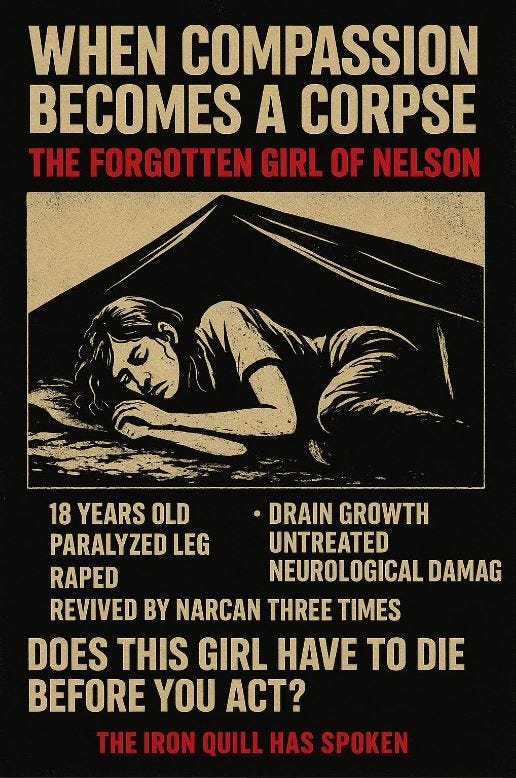
In the shadows of British Columbia’s polished legislature, beneath the grand words and hollow platitudes, lies a tent in a drug camp. Inside it—broken, assaulted, half-alive—sleeps a girl whose cries have echoed through the corridors of power for four long years… unanswered.
She is 18 years old.
She has a paralyzed leg.
She has a brain growth and untreated neurological damage.
She’s been raped.
Revived by Narcan three times.
And left, like refuse, in the streets of Nelson.
MLA Claire Rattée had the spine to drag this girl’s story out of the ditch and throw it onto the polished marble floor of the Legislature. She didn’t come with slogans. She came with a father’s plea. A father—a recovering addict himself—who begged Child and Family Services, the Ministry of Health, the local MLA, anyone who would listen. But in this Canada, pleas for help are background noise to bureaucrats who worship procedure more than people.
And so the cycle repeats:
“We feel sympathy.”
“We’re expanding services.”
“We opened 47 units at Lakeside Place.”
And yet the girl sleeps in a tent.
What good are your units if the broken are turned away at the door? What good are your programs if a teenager has to be revived three times before anyone notices she’s even dying?
This is not just failure—it is state-sponsored abandonment.
This girl isn’t just a case study. She is a canary in the collapsing coal mine of BC’s addiction and mental health system. A system that spends billions while letting children rot in drug dens. A system where ministers offer “thoughts” while fathers bury daughters.
Let me ask the question Claire Rattée dared to speak aloud:
Does this girl have to die before you act?
Or has compassion in this country already died—and no one noticed the funeral?
To those still awake… write. Speak. Shout. This is not governance—it is negligence. And the cost is a generation left bleeding in the alleys while politicians polish their promises.
The Iron Quill has spoken.