
The Gatekeepers Will Answer

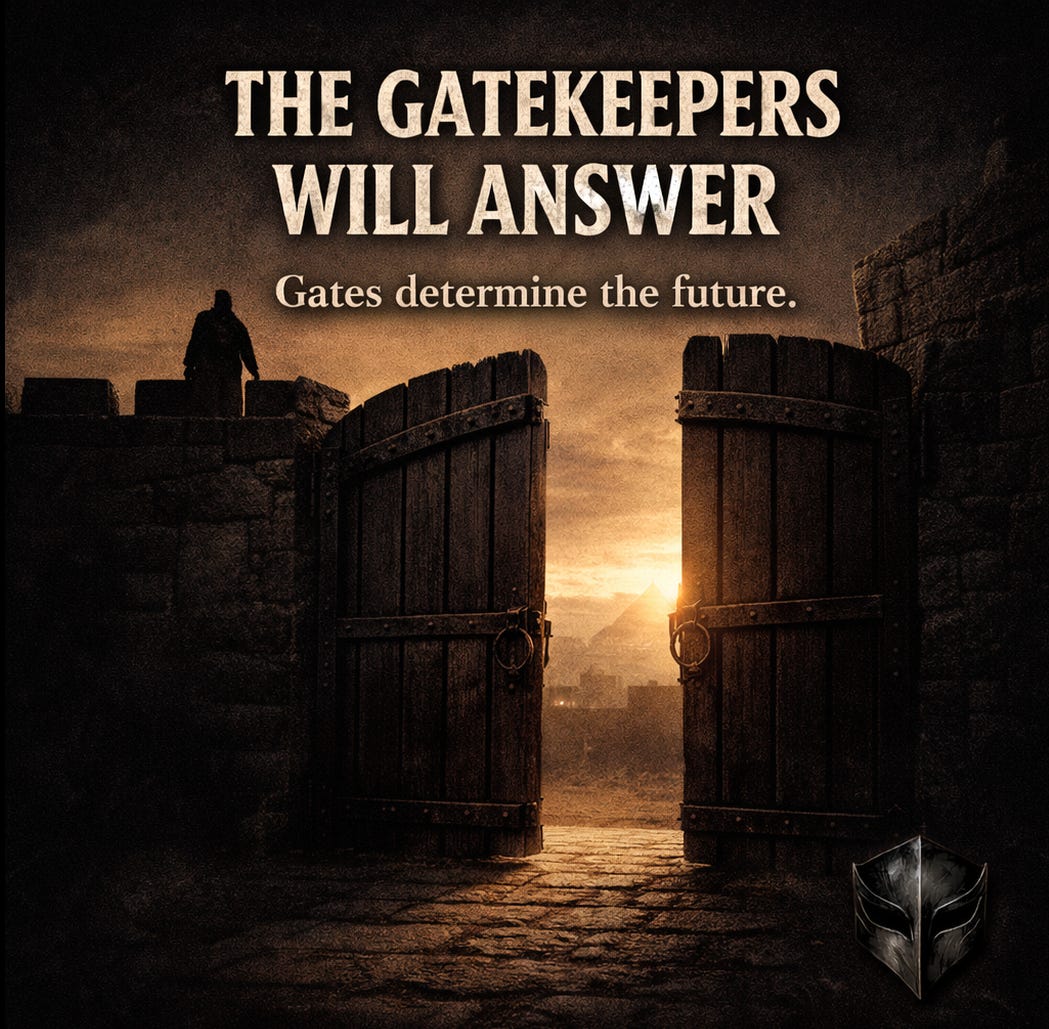
Nehemiah did not celebrate when the walls were finished.
There were no victory speeches.
Danger was not assumed to be past.
No belief that restoration alone meant safety.
Instead, Nehemiah turned immediately to the gates.
That choice tells us more about leadership than the walls ever could.
⸻
Gates Before Glory
In the ancient world, walls impressed outsiders. Gates determined survival.
Walls stopped force.
Gates regulated permission.
A city could survive a damaged wall for a season.
Careless gates cost generations.
Nehemiah understood this instinctively. The moment the wall was complete, Scripture tells us what came next.
“Now when the wall had been built and I had set up the doors, and the gatekeepers, the singers, and the Levites had been appointed…”
— Nehemiah 7:1 (ESV)
Before policy.
Before prosperity.
Before peace.
Gatekeepers.
⸻
The Role of the Gate in Scripture
Gates were not symbolic in Scripture. They were administrative, moral, and spiritual.
At the gate:
• elders judged disputes
• authority was exercised
• access was controlled
• danger was assessed
A gate was not about who was strong enough to break in.
It was about who was allowed to enter.
That distinction matters.
⸻
Nehemiah’s First Act of Leadership
Nehemiah did not assume rebuilt walls meant restored security.
He appointed men.
He gave instructions.
He restricted access.
“And I said to them, ‘Let not the gates of Jerusalem be opened until the sun is hot. And while they are still standing guard, let them shut and bar the doors.’”
— Nehemiah 7:3 (ESV)
Why?
Because dawn is vulnerable.
Because transition invites complacency.
Because restoration attracts opportunists.
Nehemiah did not trust routine to protect the city.
He imposed vigilance.
⸻
Gatekeepers Are Not Owners
The gatekeepers did not own Jerusalem.
They did not build the walls.
They did not rule the people.
They did not claim the city as their possession.
But they were accountable for what passed through the gates.
Delegated authority does not dilute accountability.
God does not require ownership to assign responsibility.
He requires obedience.
⸻
Why Gates Fail
Gates rarely fail because of force.
They fail because vigilance is replaced with habit.
Responsibility shrinks into procedure.
Decisions are made quietly and justified as routine.
In Scripture, open gates are almost never accidents.
They are decisions.
And God holds gatekeepers accountable not for what they build—but for what they allow.
⸻
The Cost of Open Gates
The Bible leaves no ambiguity here.
Loss follows permission.
Judgment follows neglect.
Consequences follow silence.
“If the watchman sees the sword coming and does not blow the trumpet… I will require his blood at the watchman’s hand.”
— Ezekiel 33:6 (ESV)
This is not about intent.
It is about duty.
God does not judge leaders only for harm they cause—but for harm they fail to prevent.
⸻
A Warning for Every Generation
Nations rarely fall when walls collapse.
They fall when gates are treated as formalities.
Cities fail when authority is administered without discernment.
People drift when guardians confuse neutrality with faithfulness.
The most dangerous words a gatekeeper can speak are not “I approve.”
They are “I assumed.”
⸻
The Iron Quill Verdict
God appoints gatekeepers.
God expects vigilance.
God does not excuse silence.
Walls may stand for a season.
Prosperity may linger for a time.
But gates determine the future.
And gatekeepers will answer.
“Keep your heart with all vigilance, for from it flow the springs of life.”
— Proverbs 4:23 (ESV)
Because what is left unguarded is never left untouched.
—The Iron Quill
Beautiful insight The Lord be with you 🙏
A heavy cross is borne by the gatekeepers. May they remain strong throughout the storms.
My prayers ascend each morning and night for them. God’s blessings be upon you. ✝️🙏✨♥️