
Bread, Circuses, and the Beast

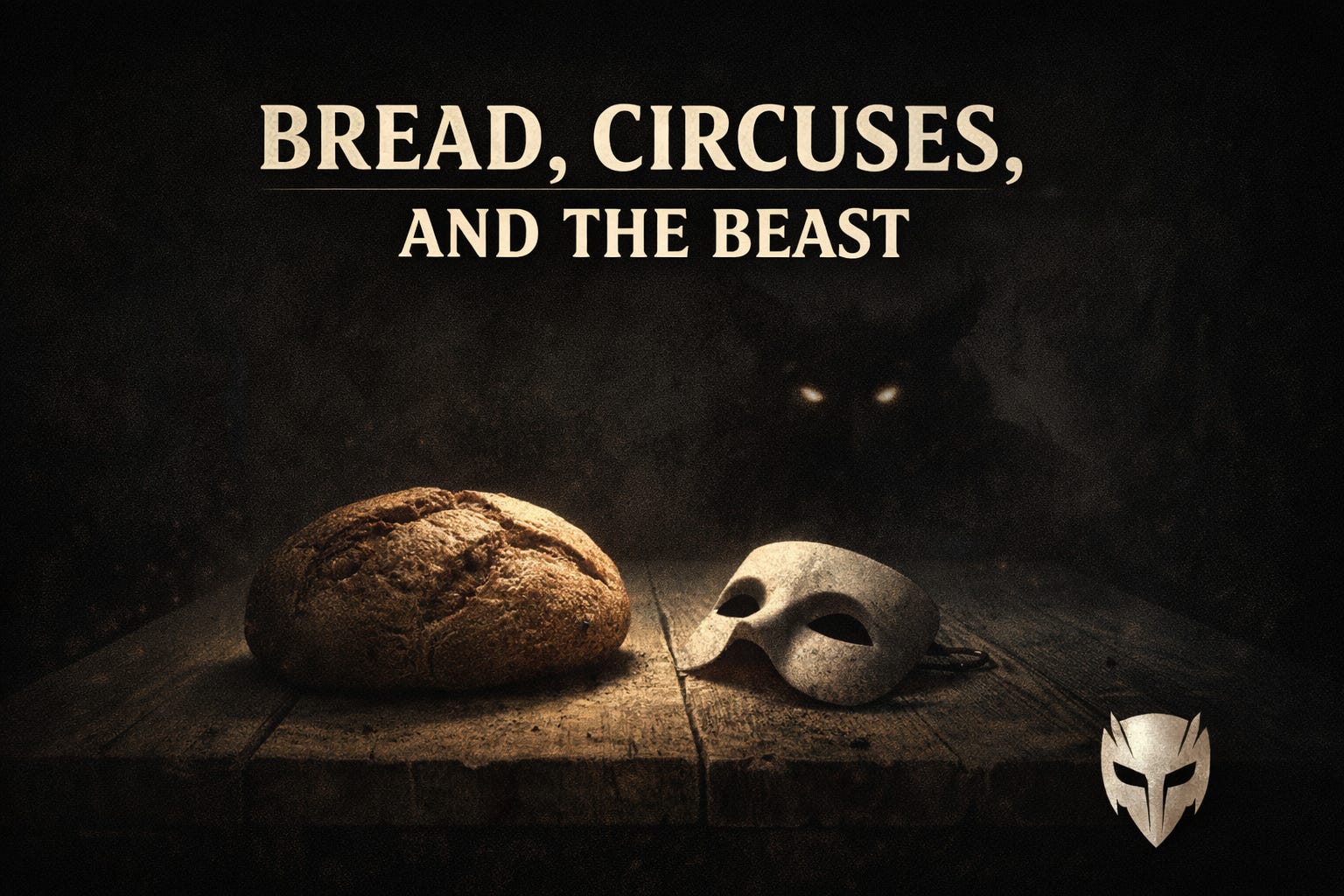
The Beast does not arrive screaming.
It does not begin with boots in the street or chains on the wrists. Scripture shows a far subtler pattern. Control does not come first through terror. It comes through provision. Through distraction. Through systems that make resistance feel unnecessary and obedience feel normal.
The most effective form of control is not fear.
It is comfort.
Empires that rule by violence do not last. Empires that rule by dependence do.
⸻
The Old Strategy That Never Failed
The strategy is ancient, and it has never needed improvement.
Nebuchadnezzar did not demand belief. He demanded participation. The image on the plain did not require love, loyalty, or conviction. It required a moment of compliance. Bow, and life continued. Refuse, and the cost became personal.
The temptation offered to Christ followed the same pattern. No war. No suffering. No cross. Just the kingdoms of the world, handed over cleanly, if allegiance could be redirected quietly.
The Beast does not need you to believe in it.
It only needs you to cooperate.
Force creates rebels. Comfort creates participants.
⸻
Bread as Control
Before worship is demanded, access is regulated.
Scripture does not hide this. The system that emerges in the last days ties participation in daily life to permission. Buying and selling become privileges, not rights. Survival becomes conditional.
This is not new.
Egypt fed before it enslaved. The people gave up land, autonomy, and future inheritance one concession at a time in exchange for security. Hunger prepared the ground. Dependency sealed the deal.
Chains are loud. Systems are quieter and far more effective.
When survival depends on approval, freedom becomes theoretical.
When daily life depends on permission, resistance is no longer heroic. It is inconvenient.
⸻
Circuses as Sedation
Control does not rely on bread alone. It requires distraction.
Scripture repeatedly condemns a people who eat, drink, and entertain themselves while judgment approaches. Not because joy is sinful, but because distraction dulls discernment.
Noise replaces vigilance. Stimulation replaces meaning. Outrage is endlessly consumed, but never resolved. Attention is spent on spectacle while foundations quietly shift beneath the feet.
A distracted people do not need to be conquered.
They simply drift into captivity.
Circuses keep the crowd occupied while decisions are made elsewhere.
⸻
Why the Beast Prefers Comfort Over Violence
Violence creates martyrs. Comfort creates defenders.
Scripture shows that when the great system finally falls, it is not the righteous who mourn it. It is the merchants. The beneficiaries. Those whose livelihoods depended on its continuation.
The Beast survives because people confuse stability with righteousness. They defend what feeds them. They excuse what sustains them. They rationalize what makes life easier.
When convenience becomes moral, captivity becomes invisible.
⸻
Worship Without Words
Worship is not declared.
It is demonstrated.
Scripture does not define worship by language alone, but by dependence. What you cannot live without will rule you. What you fear losing will command you. What you excuse will own you.
Idolatry rarely announces itself. It embeds. It integrates. It presents itself as necessity rather than devotion.
The most dangerous idols are not hated.
They are relied upon.
⸻
The Quiet Test of the Faithful
God does not begin by asking His people to overthrow the system.
He asks something far smaller and far harder.
Will you eat from it?
Daniel did not refuse the idol first. He refused the table. Faithfulness began with diet before it ever reached defiance. A quiet decision made in private long before it was tested in public.
The test is rarely dramatic.
It is daily.
Small compromises. Justified participation. Silent accommodation. Each one harmless in isolation. Each one shaping allegiance.
The faithful are not identified by volume, visibility, or outrage. They are identified by restraint.
⸻
The Beast Does Not Need Your Allegiance
The Beast does not ask you to die for it.
It asks you to live quietly within it.
It offers bread so you will not ask questions.
It offers circuses so you will not look up.
And it offers stability so resistance never feels necessary.
The greatest danger is not persecution.
It is accommodation.
The final battle is not fought first in the streets. It is fought at the table, in the habits of daily life, in the quiet choices no one else sees.
The Beast does not conquer nations by force.
It absorbs them by comfort.
And only those who learn to live without its bread will ever be free from its grip long before the grip becomes visible.
— The Iron Quill
The Beast is like a snake 🐍 waiting to bite. What shall you choose? A cage? Or freedom?
There’s some real insight here in that systems often stabilize themselves through comfort and habituation rather than overt force. Where I diverge is in treating participation as an act of allegiance. Dependence is usually a structural condition, not a moral choice, and exit is rarely available without privilege or coordination. The harder work isn’t abstention, but designing systems that can absorb inheritance pressure without hardening into identity. That distinction is important so I’ll leave it there.